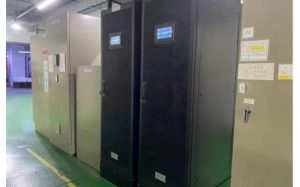
Two sets of modular UPS 300KW systems were successfully installed and commissioned in Seoul, South Korea
Benefits of Modular Online UPS in Data Centers
1. Scalability
One of the most significant advantages of Modular Online UPS systems is their scalability. Data centers often experience fluctuating power demands due to varying workloads and expansion plans. Modular UPS systems allow operators to start with a smaller configuration and gradually add modules as demand increases. This ensures that the power infrastructure grows in tandem with the data center’s needs without requiring a complete overhaul of the existing system.
2. Redundancy and Reliability
Modular UPS systems enhance reliability through redundancy. By utilizing multiple modules, data centers can achieve N+1 or even N+X redundancy, where additional modules are available to take over in case of failure. This design minimizes the risk of downtime, ensuring that critical operations continue uninterrupted even during maintenance or unexpected failures.
3. Improved Efficiency
Modular Online UPS systems are designed to operate at optimal efficiency levels. They can be configured to run only the necessary modules based on the current load, reducing energy consumption and operational costs. Many modern modular UPS systems also feature advanced power management technologies that optimize energy use, further enhancing overall efficiency.
4. Simplified Maintenance
The modular nature of these UPS systems simplifies maintenance procedures. Individual modules can be serviced or replaced without taking the entire system offline, allowing for continuous operation of the data center. This capability not only reduces maintenance-related downtime but also enhances the overall reliability of the power supply.
5. Enhanced Monitoring and Management
Many Modular Online UPS systems come equipped with advanced monitoring and management features. Operators can track performance metrics, power usage, and battery health in real time, facilitating proactive maintenance and quick responses to potential issues. This level of visibility is crucial for maintaining optimal performance and ensuring the longevity of both the UPS system and the data center infrastructure.
Implementation Strategies
When implementing a Modular Online UPS system in a data center, several strategies should be considered:
1. Assess Power Requirements
Before selecting a Modular Online UPS, it is essential to conduct a thorough assessment of the data center’s power requirements. This includes understanding current loads, future growth projections, and the desired level of redundancy. Accurate assessments will inform the selection of the appropriate modules and configurations.
2. Design for Redundancy
Incorporating redundancy into the design of the UPS system is critical. Data center operators should aim for at least N+1 redundancy to ensure that power supply remains uninterrupted during maintenance or module failures. This design consideration will significantly enhance the reliability of the data center’s operations.
3. Regular Testing and Maintenance
To ensure optimal performance, regular testing and maintenance of the Modular Online UPS system are essential. Data center operators should establish a routine maintenance schedule that includes testing of modules, battery health checks, and software updates. Proactive maintenance can prevent potential issues and extend the lifespan of the UPS system.
4. Invest in Monitoring Solutions
Leveraging advanced monitoring solutions can provide valuable insights into the performance of the Modular Online UPS system. Data center operators should consider investing in software that offers real-time monitoring, alerts, and analytics, enabling them to make informed decisions regarding power management and system optimization.
With their ability to adapt to changing demands, enhance redundancy, and improve overall efficiency, these systems are becoming increasingly popular in the data center landscape. By carefully
Related images