Two quotations can show similar battery capacity yet solve different problems. One may distribute -48V DC to telecom equipment; the other may keep an AC circuit alive. At a remote site with both kinds of load, compare the outputs shown on the drawings before comparing the cabinets.
The short answer: DC-dominant sites point toward a telecom power system, AC-dominant sites toward an outdoor UPS, and mixed sites need a proposal for both outputs. A battery’s internal voltage is not evidence that the required load terminals exist.
Trace the loads before comparing cabinets
The load sheet should record each protected device’s input range, normal and peak demand, interruption tolerance and backup duration. Sort the entries by required output, DC or AC. This is a different exercise from adding all the nameplate powers into one “UPS size.”
| Load or site question | Record in the brief | What it decides |
|---|---|---|
| Which equipment takes -48V DC? | Input range and steady/peak current | DC output and distribution requirements |
| Which equipment takes AC? | Voltage, frequency, running and starting demand | AC output requirements |
| How long must each group remain live? | Priority and backup duration by circuit | Whether the outputs can share one backup objective |
| What feeds the site? | Grid, generator or solar, plus source sequence | Input-side configuration |
| Where will the equipment live? | Temperature, space, cable entry and access | Enclosure and service constraints |
The table defines the comparison; it does not size the rectifier, UPS or battery. That comes after the demand and outage objective have been verified.
When a 48V DC telecom power system makes sense
For a DC-heavy site, the supplier’s drawing should trace the rectifier and battery to the distribution circuits and then to the equipment terminals. Check current, protection and circuit isolation at that point. A catalogue family name cannot show which modules the quoted cabinet contains.
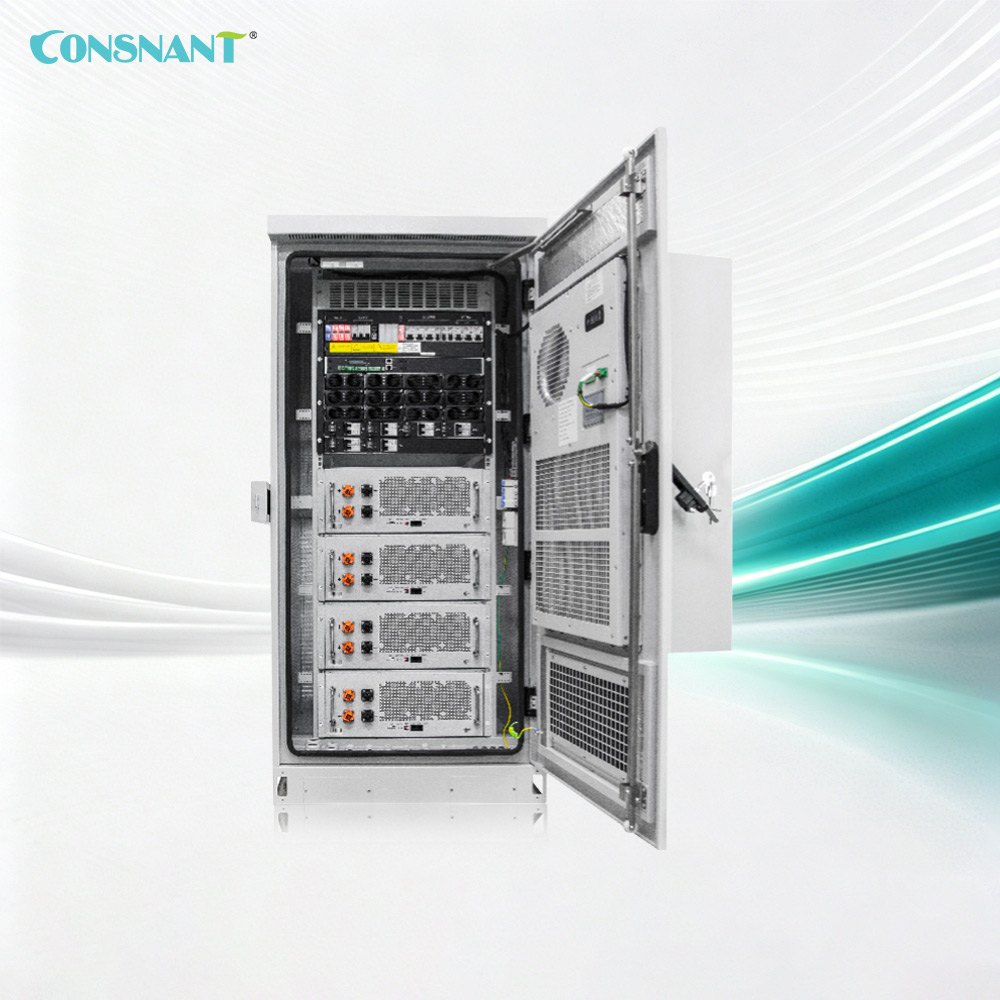
CONSNANT describes its outdoor telecom power system range as modular. Its category page says rectifier, solar-charging or inverter modules can be combined with monitoring and distribution units according to power demand, backup duration and site environment. That gives an engineer a useful direction for a DC-led inquiry. It does not establish which modules have been selected for a specific quotation; ask for the configured block diagram.
An essential AC auxiliary belongs on the same brief, with its own power and runtime. A DC-led proposal is incomplete unless it identifies the AC backup path too.
When an outdoor UPS should lead the comparison
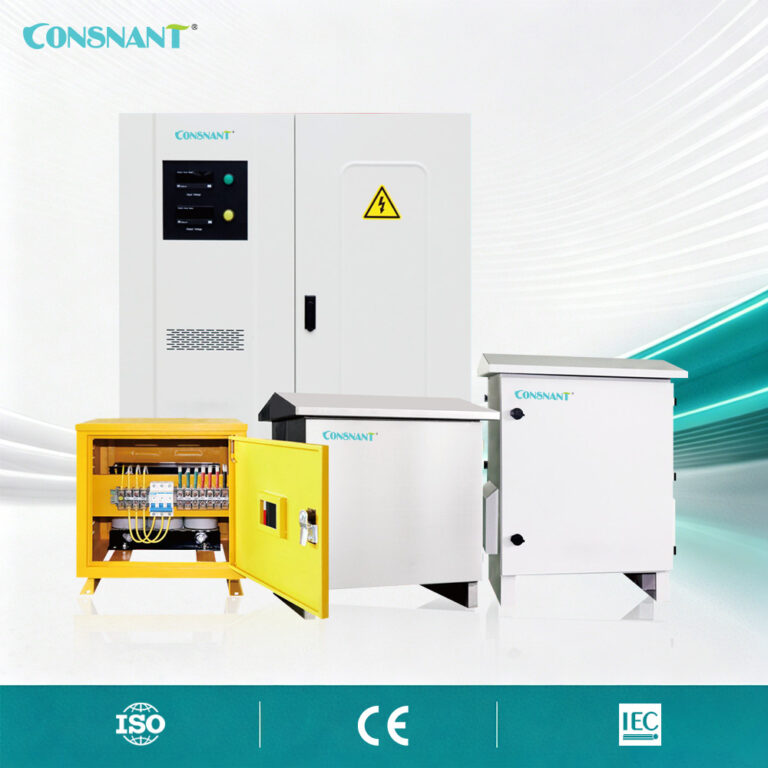
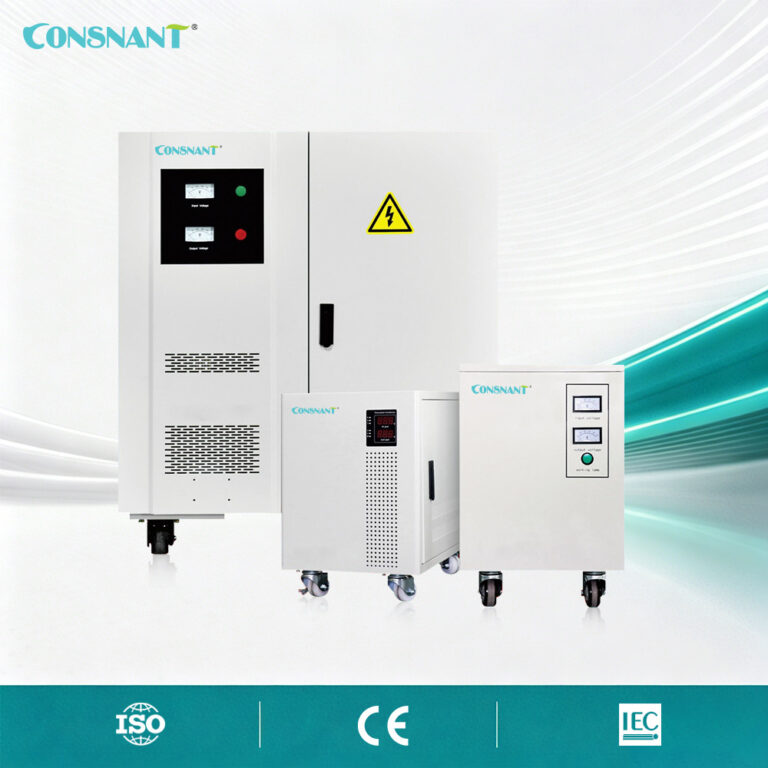
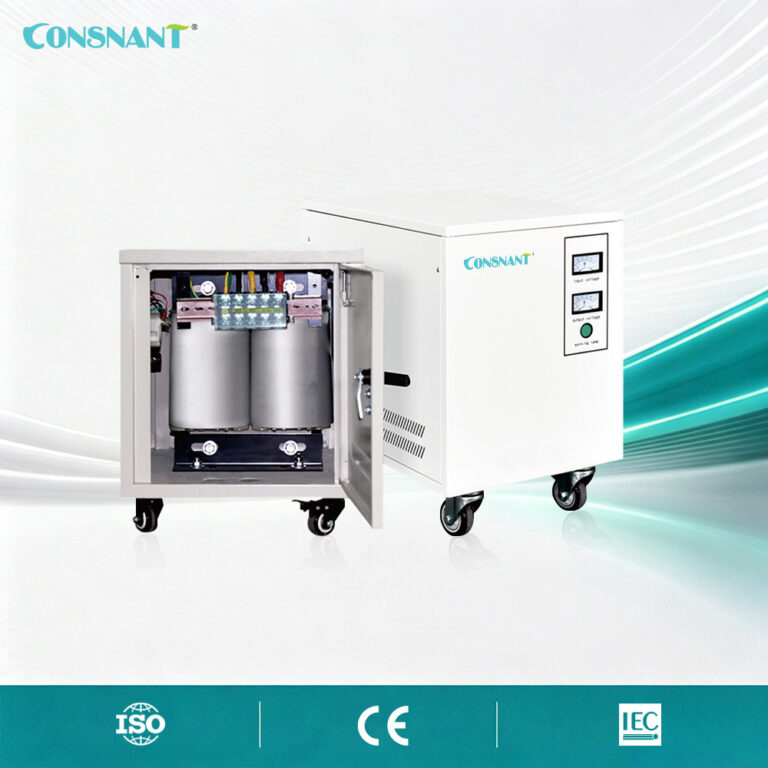
Where the protected equipment mainly takes AC, an outdoor UPS is the more direct comparison. CONSNANT’s outdoor UPS category presents a 1–40kVA family and lists outdoor communication base stations among its applications. Start the specification with AC output voltage and frequency, running watts, peak or starting demand, and required backup time. Input conditions, maintenance access and the site’s environment belong in the same inquiry.
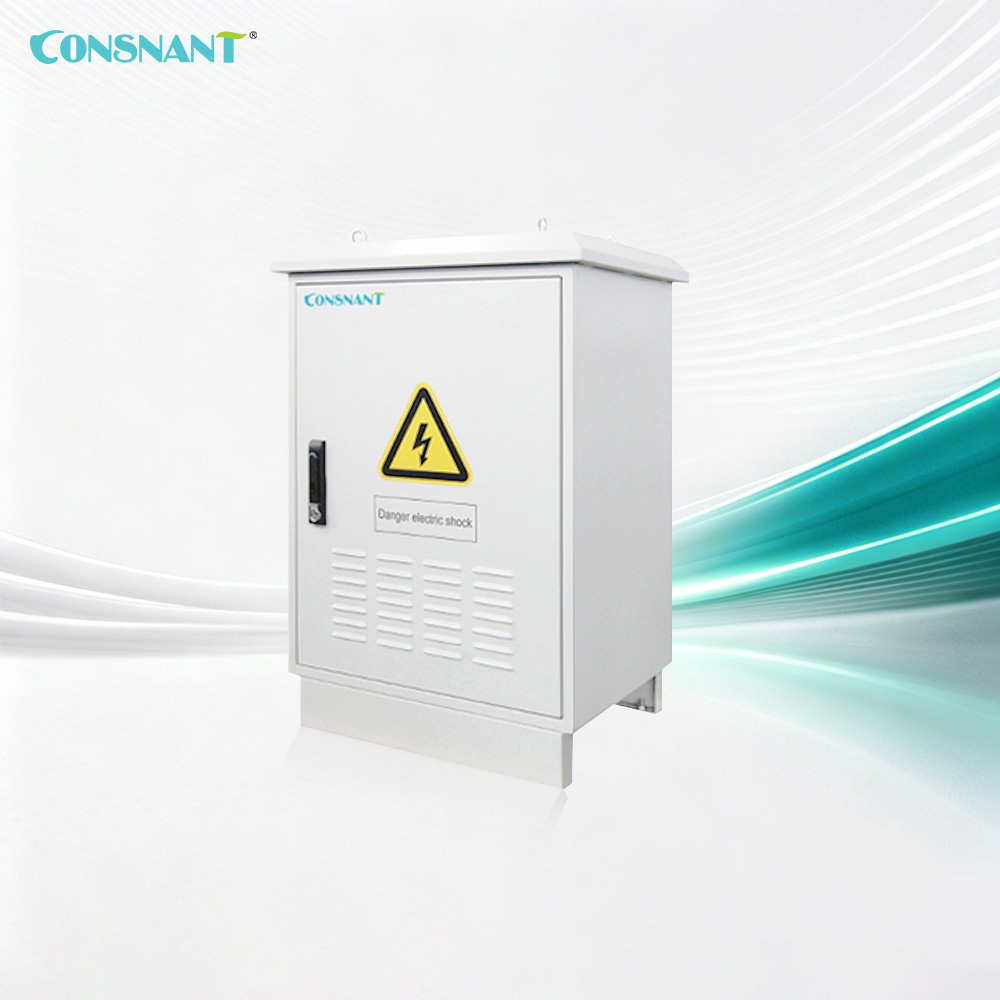
The category page discusses project-dependent voltage, protection, mounting, battery, thermal-control and cabinet choices. To move from the range to a model, review the CNW110 outdoor UPS page against the AC load and installation form, then obtain the datasheet for the offered configuration. Category-level options should not silently become model-level promises.
If the same site also has a critical -48V load, the UPS quotation must show where its protected DC supply comes from. The UPS battery circuit is not that supply by default.
A mixed site needs two output schedules
For mixed loads, compare a cabinet configured with two outputs against a DC system paired with an AC backup path. Both bids should use the same load schedule. The key drawings are the normal and outage power paths: which circuits remain live, what feeds them and what can be isolated for service.
CONSNANT’s OD-TRISS outdoor hybrid telecom power system is relevant because its product description identifies -48V DC telecom power alongside 220/230V auxiliary AC output. It makes a mixed-output proposal possible to discuss. It is not a blanket recommendation for every remote site. The site still has to provide separate DC and AC load schedules, and the supplier has to confirm the offered outputs and autonomy against them.
The drawings also need to show distribution, protection, battery arrangement and monitoring for both outputs. If AC auxiliaries can be shed earlier than the DC telecom loads, give the two groups separate runtime targets; one unexplained backup-time figure hides that design choice.
What a useful RFQ should bring back
An RFQ can be short if its attachments are precise: a single-line diagram, DC and AC load schedules, outage priorities and backup times. Add the site’s source sequence and installation constraints. For a remote location, access and monitoring requirements belong there too.
In return, require an output-by-output proposal with the included modules, battery arrangement and autonomy assumptions marked. Put options in a separate column. This lets the buyer compare the DC-led, UPS-led and mixed-output bids on the same electrical brief.
Conclusion
The output required at the load terminals is the first filter. Begin with a DC telecom system for a predominantly -48V schedule, with an outdoor UPS for predominantly AC loads, and with both paths for a mixed site. CONSNANT has relevant product families and a mixed-output OD-TRISS option; the verified load schedule and the supplier’s configuration drawing should decide which of them belongs on the final shortlist.
FAQs
Does a 48V UPS battery provide a -48V telecom output?
Not by itself. A battery circuit and an externally available load output are different parts of the specification. Check the actual terminals and distribution on the proposed system drawing.
Must a site with DC and AC loads use two cabinets?
No. Compare a configured mixed-output cabinet with coordinated DC and AC systems. OD-TRISS is described with -48V DC and auxiliary 220/230V AC outputs, but the offered capacity and runtime need project confirmation.
Is kVA enough to choose the architecture?
No. It does not tell you which output interface each protected device needs. Separate the DC and AC load lists first, then size the selected paths against their demand and backup objectives.