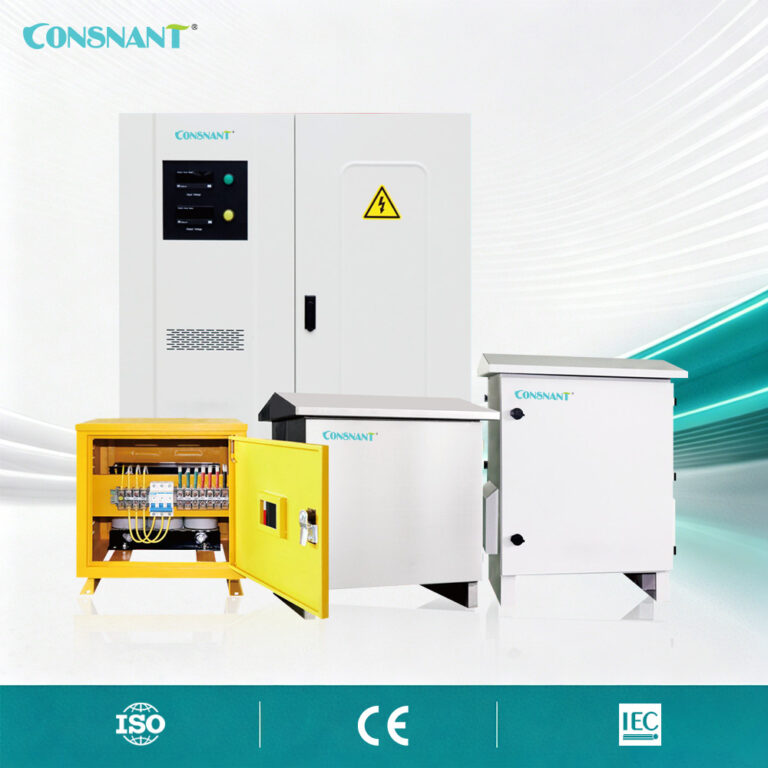
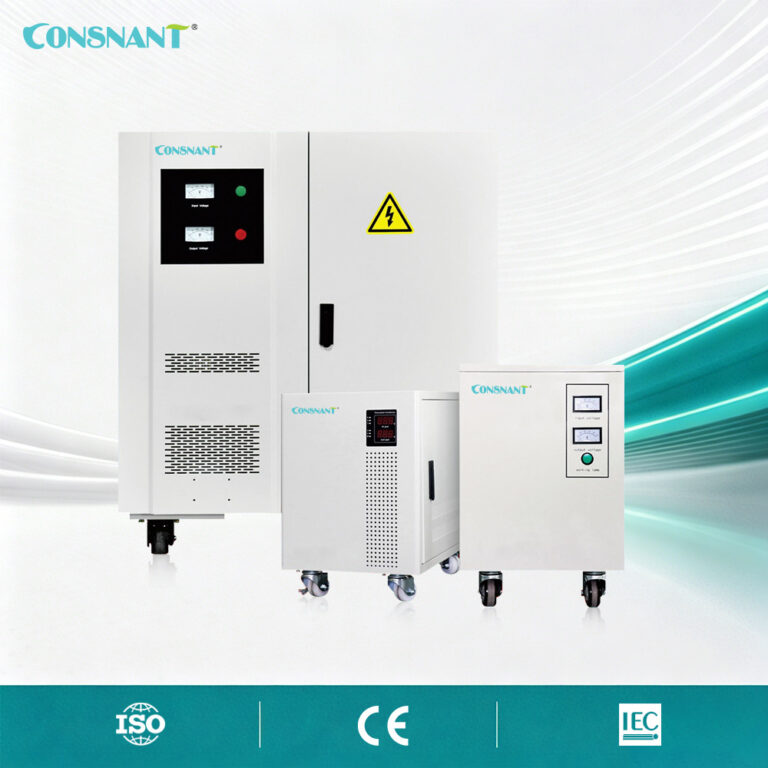
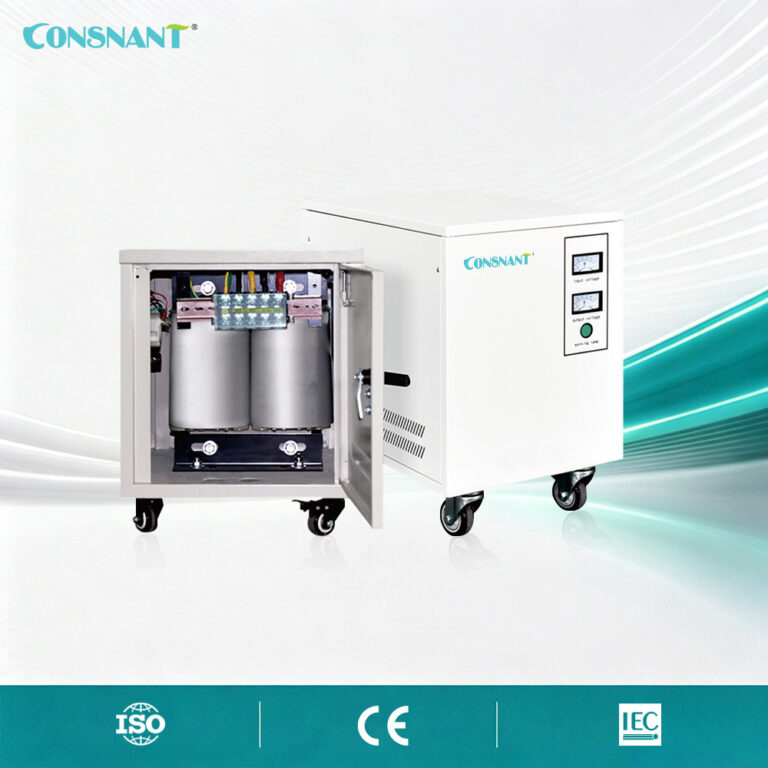
An APF reduces harmonic current. An SVG compensates reactive power. A UPS provides backup power to the loads connected to it. For APF vs SVG vs UPS in a factory, start with those three jobs. A request to improve ‘power quality’ is too broad for a quotation. Even a specific complaint, such as a PLC reboot, says little about the equipment needed until someone records the supply event. Before ordering equipment, find out what happened electrically and where it happened.
Key Takeaways
- APF: investigate harmonic current, particularly around drives and rectifiers.
- SVG: check how much reactive power the plant draws as production changes.
- UPS: decide what must stay powered, then specify the unit and batteries together.
- Define the measurement point and protected loads before comparing quotations. A factory can need more than one of these devices.
Match the Device to the Fault
The distinction is easiest to see at the switchboard. APFs and SVGs usually connect in parallel with the network they compensate. A UPS supplies a defined downstream load through its output circuit. They work on different parts of the power problem.
| Device | Main task | Evidence to collect | Important boundary |
| APF, active power filter | Reduce selected harmonic currents | Harmonic spectrum, current distortion and operating load | Does not provide outage energy |
| SVG, static var generator | Supply or absorb reactive current | Reactive demand and displacement power factor over a production cycle | Does not replace battery backup |
| UPS, uninterruptible power supply | Maintain power to connected critical loads | Disturbance records, kW, kVA and required autonomy | Does not clean every feeder in the factory |
There is some overlap in the equipment on sale. For example, an APF may also correct power factor. The catch is available current: using some for reactive compensation can leave less for harmonics. Ask the supplier to work through the busiest production state with both functions enabled. That answer is more useful than separate maximum ratings for functions that share the same converter.
APF for Harmonics from Drives and Rectifiers
A drive feeder needs a current-waveform check as well as a voltage measurement. A rectifier, for instance, can draw pulses of current rather than a sinusoid. The resulting harmonics add to heating and cause voltage drops through the supply impedance; distortion may therefore show up at other points on the network too. Be careful about working backwards from a hot cabinet, though. Heat could also mean an overloaded transformer or inadequate cooling. Neither diagnosis can be ruled out by the presence of drives.
What the Filter Changes
The APF supplies a compensating current, calculated from what it measures. The aim is to reduce the targeted harmonic current returning towards the source. Once a survey confirms that problem around a group of drives, review the active power filter range. The drives will still stop if their supply disappears: filtering does not give them a store of energy.
Placement matters. Compensation at a main bus and compensation close to a troublesome machine do not unload exactly the same cable sections. Agree where performance will be measured, which operating conditions apply and which harmonic orders require attention before accepting a filtering target.
Do Not Size from a THDi Percentage Alone
A screenshot showing current total harmonic distortion, or THDi, is only part of the survey. Keep the ampere readings too. A lightly loaded feeder can show a striking percentage without carrying the largest harmonic current in the plant. Record both during representative production. Put the current-transformer locations on the drawing and identify any capacitor bank already connected. For excessive neutral current, obtain a proposal that expressly covers neutral compensation. A three-wire unit is not the answer to a four-wire requirement simply because its ampere rating looks large enough.
SVG for Changing Reactive Demand
Suppose the bus needs reactive compensation while production is running, then much less when the machines are idle. This is the changing demand an SVG is meant to follow. Its converter can supply reactive current or absorb it as required. A low power-factor number by itself is not yet a specification: the meter reading needs a closer look first.
Separate Reactive Power from Distortion
Before accepting a power-factor target, ask the supplier a fairly specific question: does it mean true or displacement power factor? For displacement, only the fundamental voltage and current count. True power factor takes distortion into account too. Your meter and the quotation can therefore give different figures without either being wrong. Settle which power-factor measurement applies to the survey and the promised result. Use that same definition at acceptance, rather than discovering then that the two sides meant different things.
Poor displacement power factor points towards reactive compensation. But if that reading is already good and true power factor is still poor, take a closer look at the harmonic measurements. More reactive compensation may not be the missing piece. Use that diagnosis to decide whether the static var generator range answers the plant’s need.
Check the Existing Compensation System
The old capacitor bank belongs in this discussion too. Give the supplier its stage details and any detuning-reactor information, then agree how the existing controller and the new one should operate together, including on generator power. Keep the expected result specific. An SVG can help where reactive demand is causing voltage changes; a sag from another cause may remain. A blackout certainly still needs another energy source. Any claimed saving also needs to be checked against the plant’s tariff.
UPS for Loads That Must Stay Powered
Start a PLC-reset investigation at the PLC supply terminals: what was the voltage there when the reset occurred? A recorded interruption gives you a reason to plan backup. On the drawing, mark everything that must ride through it and trace those circuits to the proposed UPS output. Equipment left on the ordinary supply remains exposed to interruptions, even when the production team regards it as essential.
For normal online double conversion, trace the circuit in this order: AC mains, rectifier, DC, inverter, then AC to the load. On loss of mains, the battery supplies that DC instead. There are two limits to keep in mind here. The inverter cannot supply more load than it is rated for, and the battery cannot supply energy indefinitely. Have the supplier trace bypass operation separately, because a description of normal inverter operation does not explain what the load receives on bypass.
Protect the Process Dependencies
Try the proposed load list against the shutdown sequence, one action at a time. For the PLC to use a pressure signal, the instrument producing it needs power too. For a command to reach its destination across a network, the switch must stay on. Keep following those dependencies until every required action is covered. This still only backs up the listed equipment: a conveyor with an unpowered motor will not move just because its controller is alive. Large motors and regenerative drives need their own compatibility review before connection to the UPS.
Featured Product: CONSNANT CNI330 Industrial Online UPS
For a factory evaluating three-phase critical process power, the CONSNANT CNI330 Series 10–300 kVA Industrial Online UPS is worth considering. This 10–300 kVA family has three-phase input and output, with double conversion and transformers providing galvanic isolation at the input, output and bypass. Its intended applications include automated production lines and precision laboratory instruments. Those are reasons to check it against the process requirements; the factory location alone is not a reason to select it.
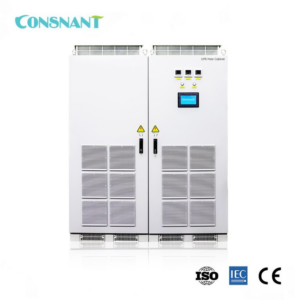
For the unit being quoted, check kW as well as kVA, then the output phases, transient loads and installation conditions. None of the family capacity figures tells you the battery runtime. Ask for the battery schedule and runtime calculation together, with the load, temperature and assumed battery end-of-life condition stated. Read the bypass drawing at the same time. On bypass, the load no longer gets the conditioning that the inverter was providing.
When a Factory Needs a Combination
Take a hypothetical packaging line. Its drive feeder has a confirmed harmonic problem, another part of the bus has changing reactive demand, and the control circuit loses power during utility interruptions. There may be a case for all three devices here. There may also be enough compensation capacity in one multifunction unit to avoid a separate SVG. The survey must settle that question. The UPS still has a distinct job: supplying the agreed critical circuit during the interruption.
Review the drawing in more than its normal operating state. Follow it again with the generator supplying the plant, with the UPS on battery, and with the load on bypass. Which measurements do the compensators then see? Which settings apply? Include protection coordination in that review. A proposed compensator on the UPS output deserves particular scrutiny from the UPS supplier because the inverter will have to accommodate its current and control behavior.
What to Send with the Factory RFQ
A useful quotation starts with records the supplier can examine:
- The single-line diagram, including existing compensation and the proposed connection point.
- The measurement files, with production running, idle or changing state clearly identified.
- A critical-load schedule with kW, kVA, phase configuration, starting behavior and the consequence of losing each load.
- The required backup duration, shutdown sequence, room conditions and maintenance arrangement.
- Acceptance criteria naming the measurement location, operating cases and required records.
Once the backup loads are clear, compare industrial and commercial UPS requirements for factories. An industrial location alone does not settle that choice. The quotation should identify the actual configuration and its operating limits, not stop at a family name.
Choose from the Measured Problem
A filter quotation, a compensation quotation and a backup-power quotation should answer different parts of the survey. Ask CONSNANT to review those records alongside the critical-load schedule and identify where its proposed equipment will act. Before placing the order, get the project’s electrical engineer to check the proposed sizes and how the equipment will be integrated.
FAQ
Can an APF Replace a Factory UPS?
No. Ask where the load’s energy would come from after the mains failed. The APF’s waveform correction cannot supply that missing energy; it has no battery-backup function.
Will an SVG Always Fix a Low Power Factor?
No. Check displacement power factor and distortion separately. Reactive compensation alone may leave poor true power factor unresolved when harmonic current is significant.
Does Installing a UPS Remove Factory Harmonics?
A UPS conditions power for its connected loads according to its design and mode. It does not automatically remove harmonic current on unrelated feeders. Its own input characteristics also belong in the site assessment.
Can One APF Handle Harmonics and Reactive Power?
Some designs support both. Confirm simultaneous compensation capacity and priority settings against the measured demand, particularly when the required functions share a converter current limit.
How Long Will a CNI330 Keep a Production Line Running?
The model family alone cannot answer that. Runtime depends on the selected battery system and actual load. Whether production continues also depends on which motors, controls and auxiliary services remain powered.